
The End of Reactive Medicine: Why Veterinary Care is Moving Beyond the Clinic Walls
One day, before I was a veterinary technician, my dog started acting off. Not full emergency mode — but enough pacing, weird breathing, and side-eye to make me nervous. It was late, the clinic was closed, and Google was doing what Google does best: convincing me that everything ends badly. I also didn’t want to bring him to the E.R. only to find out he had a bellyache and just needed some antacid.
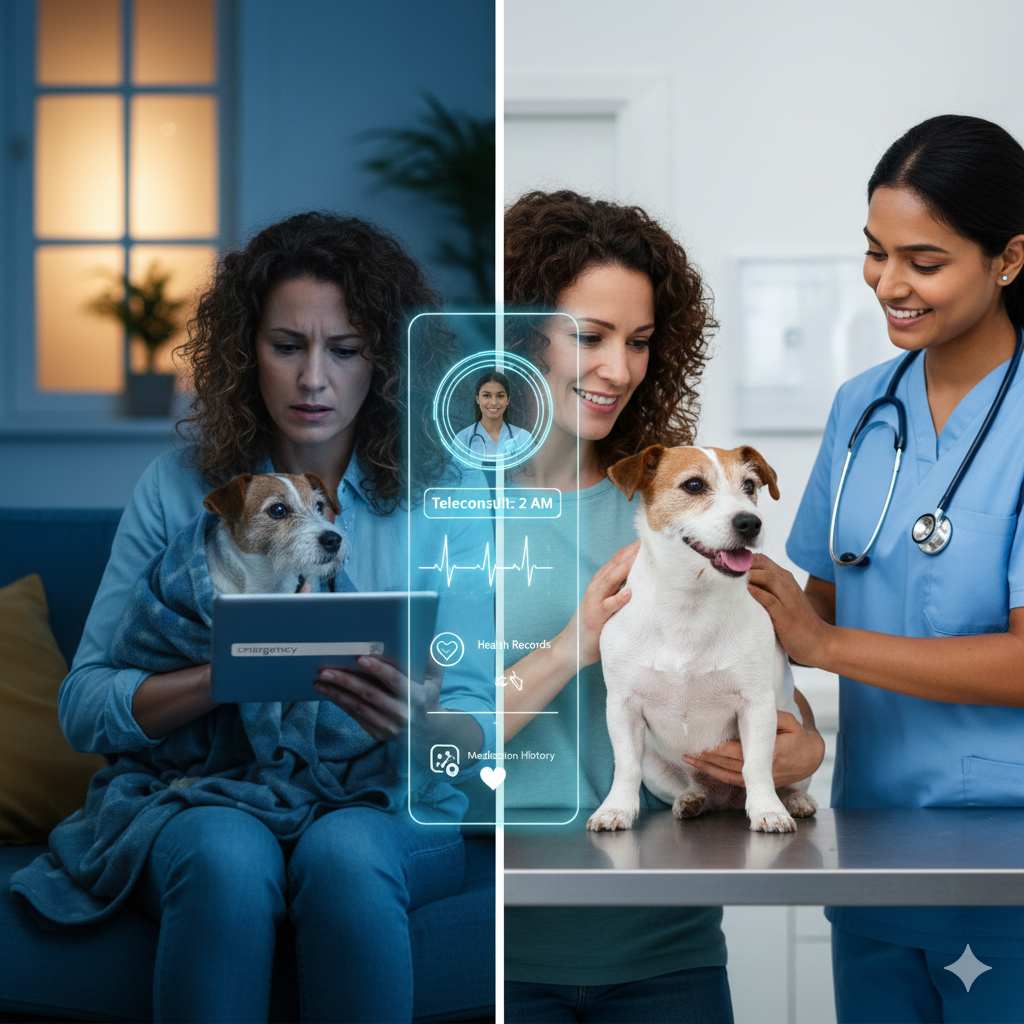
So I did what any tired, slightly panicked pet parent would do. I opened a vet telehealth app and asked, very plainly, whether this was a “wait it out” situation or a “get in the car now” situation.
Risky? Maybe. Desperate? Absolutely. But the vet walked me through what I was seeing, explained what mattered and what didn’t, told me what signs would change the answer, and helped me get through the night until our regular vet opened.
With the advice from the veterinarian that I chatted with online, I gave Floyd a little Pepsid. Phew. 10-minutes later… Dog fine. Human stress level lowered. Worth it.
That’s why the recent moves in veterinary care tech hit different.
Here’s what’s actually changing: veterinary care is starting to treat access as part of medicine, not a bonus feature.
Pet parents can now store and share real health records — labs, meds, past visits — in one place instead of digging through emails at midnight.
Care teams can reference that history when answering questions, instead of guessing from scratch. And these tools are being shaped with direct input from licensed vets who see where care breaks down after hours, on weekends, and in rural areas.
The scale matters. Millions of pet owners ask health questions every week when clinics are closed. Most of those questions aren’t emergencies — but the few that are? Timing matters.
It’s also personal. More than one vet has shared stories of catching a bad medication interaction or a subtle symptom early because they had the full picture in front of them, not just a frantic description over the phone. That gap — between “something feels wrong” and “someone qualified can look at this now” — is what these tools are meant to close.
At the same time, states are starting to loosen rules around what technology can handle under veterinary oversight. Chronic med, refills, routine follow-ups — the boring but necessary stuff that eats clinic time — can be handled faster, freeing vets to focus on cases that actually need hands-on care.
Research is moving fast too. New studies show animal health patterns can be flagged earlier by looking at behavior, sleep, and movement trends long before obvious symptoms show up. That’s not magic. It’s math, repetition, and a lot of data — used carefully.
The reality check: this tech still misses things. It will never replace a physical exam, a gut check, or years of clinical experience. And that’s the point. It works best alongside vets, not instead of them. One catches patterns. The other catches nuance.
My take: the pushback around AI tech in vet care isn’t really about pets. It’s about trust. People don’t want cold systems making life-or-death calls. Fair. Neither do vets.
But no one hates the idea of help at 2 a.m. when their dog is shaking and the nearest clinic is an hour away. What people hate is feeling abandoned.
Veterinary care isn’t being replaced. It’s being extended into the hours, places, and moments where it usually disappears. You can’t keep a vet in your pocket (unless they are really tiny). But you can keep access to guidance, context, and calm when it matters most.
Used the right way, today’s tools can prevent a bad night from becoming a crisis. What’s coming next can help catch problems earlier, keep treatments on track, and make care less reactive and more steady.
That’s the future pet owners actually want: care that shows up when real life does. And we can build it — carefully, responsibly, and with vets firmly in the loop.
Key Takeaways: The Future of Pet Care
Access is Medicine: Modern veterinary care is treating "access to guidance" as a core part of the medical process, not just a luxury.
The Power of Context: Centralized health records allow vets to see the "full picture" (labs, meds, and history) instantly, reducing guesswork during off-hours.
Proactive, Not Reactive: Data-driven tools can now flag subtle changes in behavior and sleep patterns before they become physical emergencies.
A Support System, Not a Replacement: Technology is designed to handle routine tasks and after-hours screening, freeing up vets to focus on complex, hands-on clinical cases.
Closing the "Abandonment" Gap: The goal of vet-tech is to ensure pet parents never feel alone at 2 a.m., bridging the gap between "something is wrong" and a physical exam.
