
Why Your Dog is Shedding More This Fall (And What to Do About It)
If you've noticed tumbleweeds of fur rolling across your floors and your dog leaving a trail of hair everywhere they go, you're not imagining things. Fall shedding is a real phenomenon, and it can be surprisingly intense. While some shedding is normal year-round, many dogs experience a dramatic increase in hair loss during autumn months.
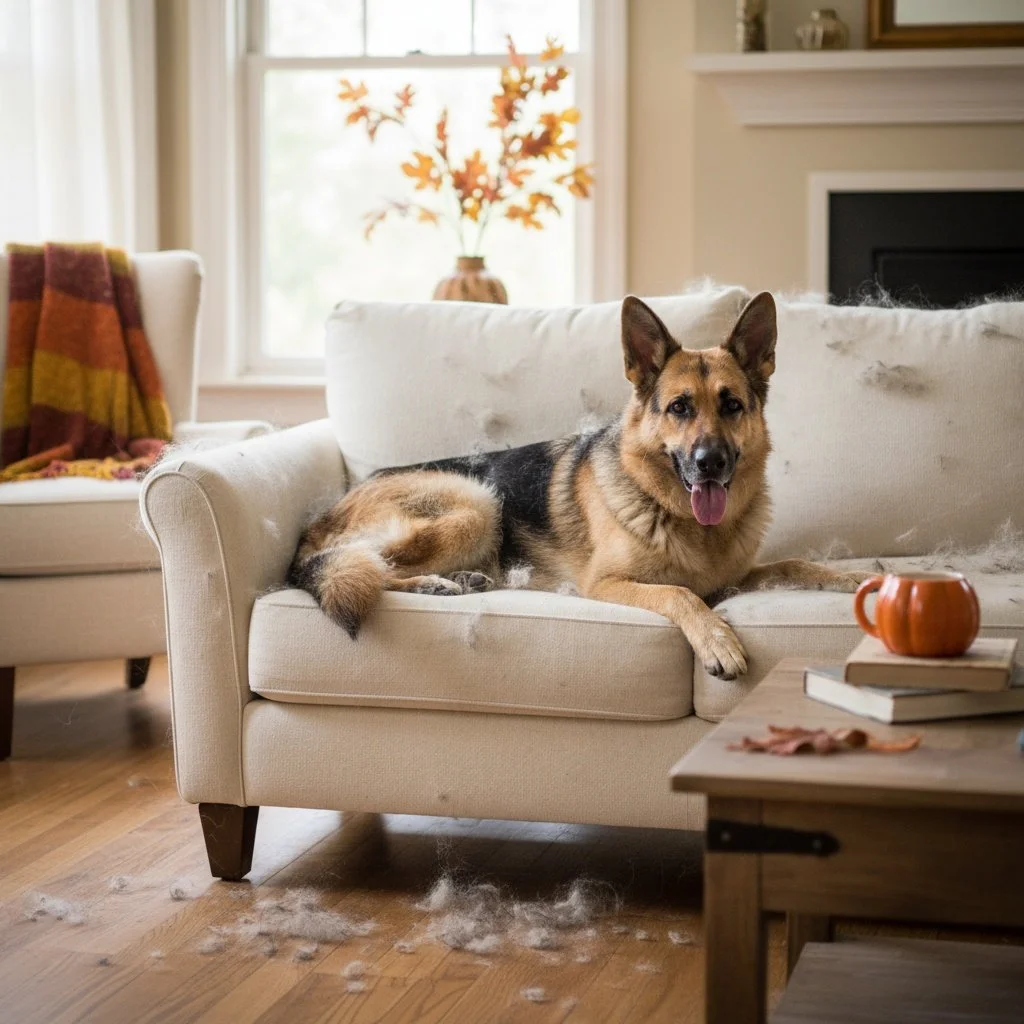
Understanding why this happens and how to manage it can help you keep your home cleaner, your dog more comfortable, and prevent potential health issues related to excessive shedding. Let's explore the science behind fall shedding and the best strategies for dealing with all that extra fur.
The Science of Seasonal Shedding
Shedding is a natural, healthy process that allows dogs to replace old or damaged hair with new growth. Seasonal shedding is triggered by changes in daylight hours and temperature, not just temperature alone.
Why Dogs Shed More in Fall
As days grow shorter and temperatures drop, your dog's body receives signals to prepare for winter. This triggers a coat change—shedding the lighter summer coat to make way for a thicker, warmer winter coat.
The biological process:
Photoperiod response: Decreasing daylight hours trigger hormonal changes that affect hair growth cycles
Temperature regulation: Dogs grow denser undercoats for insulation against cold weather
Coat replacement: Old, damaged summer fur is shed to make room for new winter growth
Natural cycle: Hair follicles go through growth, rest, and shedding phases synchronized with seasons
Double-Coated vs. Single-Coated Breeds
The intensity of fall shedding varies significantly based on coat type.
Double-coated breeds (most dramatic shedding):
German Shepherds
Huskies and Malamutes
Golden Retrievers and Labrador Retrievers
Border Collies and Australian Shepherds
Pomeranians and Corgis
Bernese Mountain Dogs and Great Pyrenees
These breeds have a soft, dense undercoat beneath a coarser outer coat. They typically "blow" their coat twice a year—spring and fall—shedding massive amounts of undercoat.
Single-coated breeds (moderate, consistent shedding):
Poodles and Doodle mixes
Maltese and Yorkshire Terriers
Greyhounds and Whippets
Boxers and Pit Bulls
These dogs shed more consistently throughout the year with less dramatic seasonal variation.
Low-shedding or non-shedding breeds:
Poodles (all sizes)
Bichon Frises
Portuguese Water Dogs
Some Terrier breeds
These breeds have hair that grows continuously rather than going through distinct shedding cycles. They require regular grooming and haircuts but shed minimally.
Is This Normal or Excessive Shedding?
While fall shedding is normal, it's important to distinguish between seasonal coat changes and problematic hair loss.
Normal Seasonal Shedding
Increased hair loss that begins in late summer/early fall
Lasts 2-4 weeks (sometimes up to 6-8 weeks for heavy shedders)
Skin underneath looks healthy—no redness, flaking, or irritation
Hair comes out in clumps or large amounts when brushed
Dog's behavior, appetite, and energy remain normal
New coat growth is visible underneath
Abnormal Shedding (Requires Veterinary Attention)
Bald patches or thinning areas
Red, inflamed, or irritated skin
Excessive itching, scratching, or licking
Scabs, sores, or hot spots
Foul odor from skin or coat
Brittle, dry, or dull coat
Sudden, dramatic hair loss outside of typical shedding seasons
Behavioral changes, lethargy, or appetite loss
Health Conditions That Cause Excessive Shedding
If shedding seems abnormal, several health issues could be the cause.
Common Medical Causes
Allergies: Environmental or food allergies cause inflammation and hair loss
Parasites: Fleas, mites, or lice damage skin and coat
Hormonal imbalances: Thyroid problems, Cushing's disease, or other endocrine disorders
Nutritional deficiencies: Poor diet lacking essential fatty acids, proteins, or vitamins
Skin infections: Bacterial or fungal infections (ringworm, yeast)
Stress or anxiety: Can trigger excessive shedding and over-grooming
Medications: Some drugs have shedding as a side effect
If you suspect a medical issue, consult your veterinarian for proper diagnosis and treatment.
Managing Fall Shedding: The Essential Toolkit
While you can't stop seasonal shedding, you can manage it effectively with the right tools and techniques.
1. Brushing: Your First Line of Defense
Regular brushing is the single most effective way to manage shedding.
Brushing frequency during fall shedding:
Double-coated breeds: Daily, or even twice daily during peak shedding
Single-coated breeds: 3-4 times per week
Short-haired breeds: 2-3 times per week
Benefits of regular brushing:
Removes loose fur before it ends up on your furniture
Distributes natural oils for a healthier coat
Stimulates blood circulation to the skin
Allows you to check for skin issues, lumps, or parasites
Reduces matting and tangles
Bonding time with your dog
2. Choosing the Right Grooming Tools
Different coat types require different tools.
For double-coated breeds:
Undercoat rake: Penetrates to remove loose undercoat without cutting
Slicker brush: Removes loose hair and prevents matting
De-shedding tool (FURminator-style): Removes massive amounts of undercoat (use carefully to avoid over-brushing)
Pin brush: For finishing and fluffing the outer coat
For short-haired breeds:
Rubber curry brush: Loosens and removes dead hair
Bristle brush: Distributes oils and adds shine
Grooming glove: Convenient for quick daily brushing
For long, single-coated breeds:
Slicker brush: Prevents tangles and removes loose hair
Metal comb: Works through mats and checks for tangles
Pin brush: Gentle daily brushing
3. Bathing During Shedding Season
Strategic bathing can help loosen and remove dead hair.
Bathing tips for shedding season:
Frequency: Every 2-4 weeks during heavy shedding (don't over-bathe, which can dry skin)
Brush first: Always brush thoroughly before bathing to remove loose hair and prevent matting
Use quality shampoo: Choose moisturizing, dog-specific formulas; consider de-shedding shampoos
Thorough rinsing: Leftover shampoo can cause skin irritation and more shedding
Blow-dry: Use a pet-safe dryer on low heat while brushing to remove even more loose hair
Post-bath brushing: Brush again after drying to remove hair loosened by bathing
4. Professional Grooming
For heavy shedders, professional grooming can be a game-changer.
Professional de-shedding treatments include:
Specialized shampoos and conditioners
High-velocity dryers that blow out loose undercoat
Professional-grade de-shedding tools
Expert technique to remove maximum loose hair
Many dogs benefit from professional grooming at the beginning of fall shedding season, followed by regular home maintenance.
Nutrition's Role in Coat Health
What your dog eats directly affects coat quality and shedding.
Essential Nutrients for Healthy Coats
Omega-3 and Omega-6 fatty acids: Support skin health and reduce inflammation
High-quality protein: Hair is made of protein; adequate amounts support healthy growth
Biotin and B vitamins: Essential for skin and coat health
Zinc and copper: Support hair follicle function
Vitamin E: Antioxidant that supports skin health
Dietary Strategies
Feed high-quality dog food: Look for named meat proteins as first ingredients
Consider fish oil supplements: Rich in omega-3s (consult your vet for dosage)
Add fresh, whole foods: Small amounts of salmon, sardines, or eggs (cooked)
Ensure adequate hydration: Dehydration affects skin and coat health
Avoid frequent diet changes: Consistency supports coat health
Managing Fur in Your Home
Even with excellent grooming, some fur will end up in your house. Here's how to manage it.
Cleaning Strategies
Vacuum frequently: Daily during peak shedding; use pet hair attachments
Invest in a quality vacuum: Models designed for pet hair make a huge difference
Lint rollers and pet hair removers: Keep them in every room and your car
Rubber gloves: Dampen and rub over furniture to collect hair
Microfiber cloths: Attract and hold pet hair better than regular cloths
Washable furniture covers: Protect couches and beds; wash weekly
Air purifiers with HEPA filters: Reduce airborne dander and hair
Prevention Tactics
Designate pet-free zones: Keep bedrooms or specific furniture off-limits
Provide pet beds: Encourage your dog to use their own bed
Brush outdoors: Keeps loose hair outside
Use doormats: Wipe paws to reduce tracked-in fur
What NOT to Do
Some common practices can actually make shedding worse or harm your dog.
Avoid these mistakes:
Shaving double-coated breeds: Disrupts natural insulation and can cause permanent coat damage
Over-bathing: Strips natural oils, leading to dry skin and more shedding
Using human shampoo: Wrong pH for dog skin; causes irritation
Aggressive brushing: Can damage skin and coat; use gentle, consistent strokes
Ignoring the problem: Matted fur can cause skin issues and discomfort
Feeding low-quality food: Poor nutrition shows in coat quality
When to See a Veterinarian
Consult your vet if you notice:
Bald patches or significant thinning
Skin changes (redness, flaking, sores)
Excessive itching or discomfort
Sudden, dramatic increase in shedding outside normal seasons
Dull, brittle, or dry coat despite good care
Behavioral changes accompanying shedding
These signs may indicate underlying health issues that require professional attention.
Have concerns about your dog's shedding or coat health? Connect with a licensed veterinarian on CanopyVet to discuss your observations and get personalized advice.
The Silver Lining
While fall shedding can feel overwhelming, remember that it's a sign of a healthy, functioning coat. Your dog's body is doing exactly what it should—preparing for the changing season.
Positive perspective:
Shedding means your dog is healthy and their body is responding normally to seasonal changes
It's temporary—peak shedding typically lasts only a few weeks
Regular grooming strengthens your bond with your dog
A new, beautiful winter coat is on its way
Proper management makes it very manageable
The Bottom Line
Fall shedding is a natural, healthy process triggered by changing daylight hours and temperatures as your dog's body prepares for winter. While it can seem excessive—especially in double-coated breeds—it's completely normal and temporary.
The key to managing fall shedding is consistency: daily brushing with the right tools, strategic bathing, quality nutrition, and regular home cleaning. For heavy shedders, professional grooming can provide significant relief. By understanding why shedding happens and implementing effective management strategies, you can keep your home cleaner and your dog more comfortable throughout the season.
Remember, if shedding seems abnormal or is accompanied by skin issues or behavioral changes, consult your veterinarian to rule out underlying health problems.
Here's to surviving shedding season—and enjoying that beautiful new winter coat! 🍂🐕
