
The Role of AI in Modern Pet Healthcare: Smarter Care for Your Furry Family
Artificial intelligence is transforming healthcare—and not just for humans. AI-powered tools are revolutionizing how we monitor, diagnose, and care for our pets, making veterinary expertise more accessible and pet health management more proactive than ever before.
But what does AI in pet healthcare actually mean? And more importantly, how can it help you be a better, more informed pet parent?
Let's explore how AI is changing the game for pet health—and why it's not about replacing your vet, but empowering you to work with them more effectively.
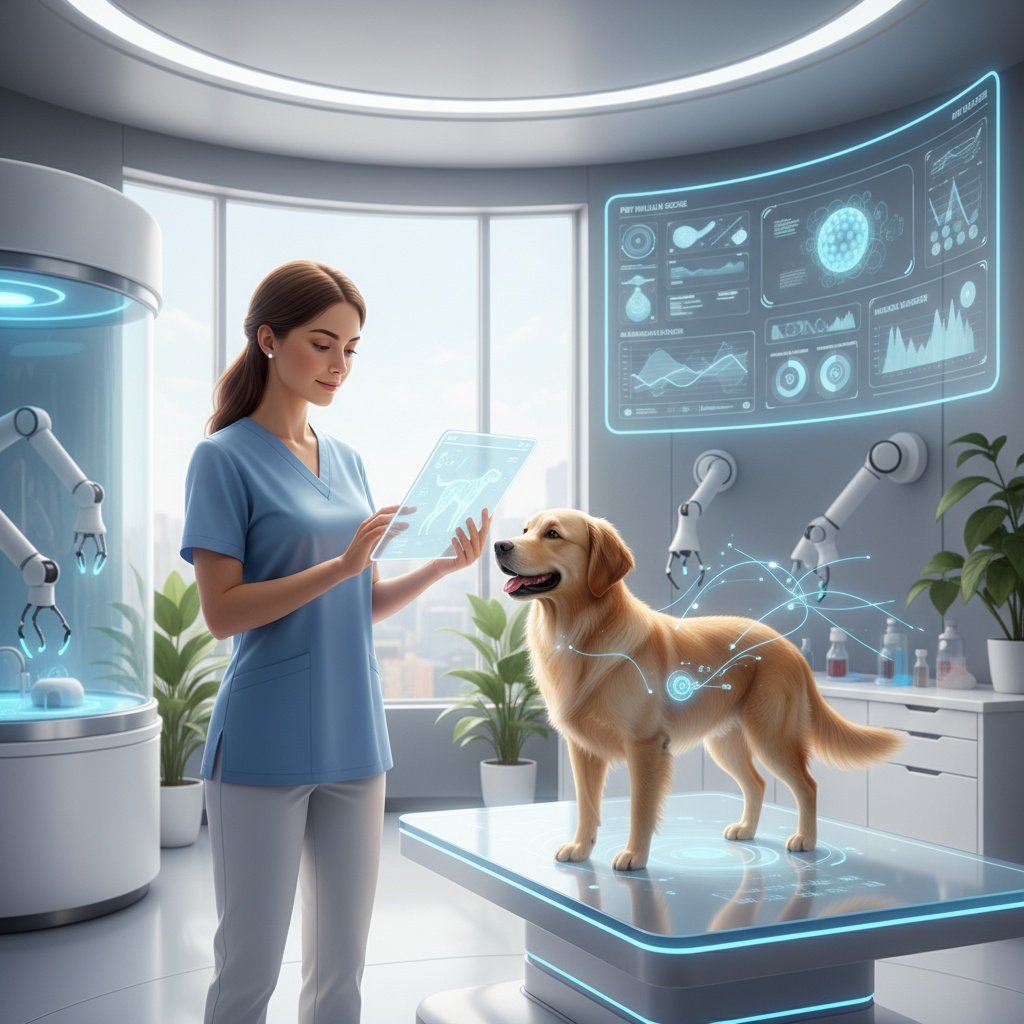
What AI Can (and Can't) Do for Pet Health
Artificial intelligence is transforming healthcare—and not just for humans. AI-powered tools are revolutionizing how we monitor, diagnose, and care for our pets, making veterinary expertise more accessible and pet health management more proactive than ever before.
But what does AI in pet healthcare actually mean? And more importantly, how can it help you be a better, more informed pet parent?
Let's explore how AI is changing the game for pet health—and why it's not about replacing your vet, but empowering you to work with them more effectively.
First, let's be clear about what AI is and isn't:
What AI IS:
A powerful tool for pattern recognition and data analysis
A way to provide preliminary assessments based on symptoms
A method for tracking health trends over time
A resource for pet parents to make more informed decisions
A complement to professional veterinary care
What AI IS NOT:
A replacement for licensed veterinarians
A diagnostic tool for emergencies (always see a vet for urgent situations)
Infallible or 100% accurate
Capable of physical examination
Think of AI as a highly knowledgeable assistant that helps you understand when to worry, when to wait, and when to seek professional care.
How AI-Powered Symptom Checkers Work
AI symptom checkers, like the one built into CanopyVet, use machine learning algorithms trained on thousands of veterinary cases to analyze symptoms and provide preliminary assessments.
Here's how it works:
You input symptoms: Describe what you're seeing (limping, vomiting, lethargy, etc.) or upload photos
AI analyzes patterns: The system compares your input against its training data
You receive guidance: Get possible conditions, urgency levels, and recommended next steps
You make informed decisions: Use this information to decide whether to monitor, use telehealth, or visit a vet
The key advantage? You get instant, preliminary information that helps you avoid both under-reacting (ignoring something serious) and over-reacting (rushing to the ER for something minor).
Real-World Applications of AI in Pet Healthcare
1. Early Symptom Detection
AI excels at spotting patterns humans might miss. By analyzing photos, videos, and symptom descriptions, AI can flag potential issues early—when they're easier and less expensive to treat.
Example: You upload a photo of a small skin lesion on your dog. AI analysis suggests it could be a hot spot developing and recommends a vet consultation within 24 hours. You catch it early, preventing a painful, expensive infection.
2. Activity and Health Monitoring
Wearable devices like FitBark GPS trackers (available with CanopyVet Premium discounts) use AI to analyze your pet's activity patterns, sleep quality, and behavior changes.
The AI learns your pet's normal baseline and alerts you to significant deviations that might indicate illness or injury—often before visible symptoms appear.
Example: Your usually active dog's activity level drops 40% over three days. The AI flags this change, prompting you to check for other symptoms. You discover early signs of arthritis and start treatment before it becomes debilitating.
3. Triage and Urgency Assessment
One of the hardest decisions pet parents face: Is this an emergency, or can it wait?
AI triage tools analyze symptoms and assign urgency levels based on veterinary protocols like the Veterinary Triage List (VTL) and Animal Trauma Triage (ATT) scores—the same frameworks used by emergency vets.
Example: Your cat vomits twice in the evening. You input this into CanopyVet's AI symptom checker. It asks follow-up questions about behavior, appetite, and hydration. Based on your answers, it determines this is likely not an emergency but should be monitored, and provides specific warning signs to watch for.
4. Personalized Health Insights
AI can analyze your pet's complete health history—vaccinations, past illnesses, breed-specific risks, age, weight—and provide personalized recommendations for preventive care.
Example: Based on your senior Labrador's health profile, AI suggests increased screening for hip dysplasia and recommends joint supplements. It also flags that their weight has been creeping up and suggests a consultation about diet adjustment.
5. Nutrition Optimization
AI-powered nutrition platforms like Nextrition (20% off subscriptions for Premium members) analyze your pet's age, breed, activity level, health conditions, and goals to create personalized meal plans backed by veterinary science.
The AI continuously adjusts recommendations based on your pet's response, weight changes, and health updates.
The Human + AI Partnership in Pet Care
The most powerful approach combines AI capabilities with human expertise and intuition:
You (The Pet Parent):
Know your pet's normal behavior and personality
Observe day-to-day changes
Provide context and history
Make final decisions about care
AI Technology:
Analyzes patterns across thousands of cases
Provides objective symptom assessment
Tracks health data over time
Flags potential concerns you might miss
Licensed Veterinarians:
Perform physical examinations
Make definitive diagnoses
Prescribe treatments
Perform procedures and surgeries
When these three elements work together—through platforms like CanopyVet—you get the most comprehensive, effective pet healthcare possible.
AI-Powered Features That Make a Difference
Photo and Video Analysis
Upload photos of skin conditions, injuries, or unusual symptoms. AI can identify common conditions like hot spots, rashes, eye infections, or dental issues and provide preliminary assessments.
Video analysis helps assess mobility issues—AI can detect limping patterns, gait abnormalities, or neurological symptoms that might be subtle to the untrained eye.
Symptom Timeline Tracking
AI helps you track symptoms over time, creating visual timelines that show progression or improvement. This is invaluable for chronic conditions or when trying to identify triggers for allergies or behavioral issues.
Medication and Treatment Reminders
AI-powered reminder systems learn your schedule and send notifications at optimal times. They can also track medication effectiveness and flag potential side effects based on symptom reports.
Breed-Specific Health Insights
AI databases contain breed-specific health information, alerting you to conditions your pet is predisposed to and recommending appropriate screening schedules.
The Future of AI in Pet Healthcare
AI technology is rapidly evolving. Here's what's on the horizon:
Predictive health modeling: AI that predicts potential health issues before symptoms appear
Advanced diagnostic imaging: AI that can analyze X-rays and ultrasounds with near-veterinary accuracy
Behavioral analysis: AI that detects subtle behavior changes indicating pain or cognitive decline
Integrated care coordination: AI that seamlessly connects pet parents, vets, specialists, and emergency care
Addressing Common Concerns About AI in Pet Healthcare
"Will AI replace my veterinarian?"
Absolutely not. AI is a tool that enhances veterinary care, not a replacement for it. Think of it like GPS navigation—it helps you get where you're going more efficiently, but it doesn't replace your ability to drive.
"Is AI accurate enough to trust?"
AI symptom checkers are trained on extensive veterinary data and are quite accurate for preliminary assessments. However, they should always be used as a starting point, not a final diagnosis. When in doubt, consult a real vet—which you can do instantly through CanopyVet's $5 telehealth service.
"What about my pet's privacy?"
Reputable platforms like CanopyVet use industry-standard encryption and security protocols to protect your pet's health data. Your information is never sold or shared without your explicit permission.
Making AI Work for Your Pet
To get the most out of AI-powered pet healthcare tools:
Be thorough: Provide complete, accurate information when using symptom checkers
Document consistently: Regular photos, videos, and notes create better data for AI analysis
Combine with professional care: Use AI to inform your decisions, then consult with vets for diagnosis and treatment
Track over time: AI gets more accurate as it learns your pet's individual patterns
Stay educated: Understand what AI can and can't do
Experience the Power of AI + Veterinary Expertise
CanopyVet combines cutting-edge AI technology with 24/7 access to licensed veterinarians, giving you the best of both worlds:
AI Symptom Checker: Instant preliminary assessments using text or photos
24/7 Telehealth: Connect with real vets anytime for just $5
Health Tracking: AI-powered analysis of symptoms, photos, and patterns over time
Smart Reminders: Never miss important care
Complete Records: All your pet's health information in one secure place
Join CanopyVet today and experience the future of pet healthcare—where technology and compassion work together to keep your pet healthy and happy.
Because your pet deserves the smartest care possible.
Upgrade to CanopyVet Premium ($9.99/month) for exclusive access to advanced health tracking with FitBark GPS, personalized nutrition from Nextrition, expert training programs, and more AI-powered tools to optimize your pet's health.
